
Years of Journey
Clients Served
Worth of Matters Resolved
Suite of Services
Didn't find your specific legal issue?
Contact us for a confidential case evaluation. Our legal experts are here to help you.
Get in touch now
We are here to provide free legal advice.
 Let’s chat on WhatsApp
Global offices
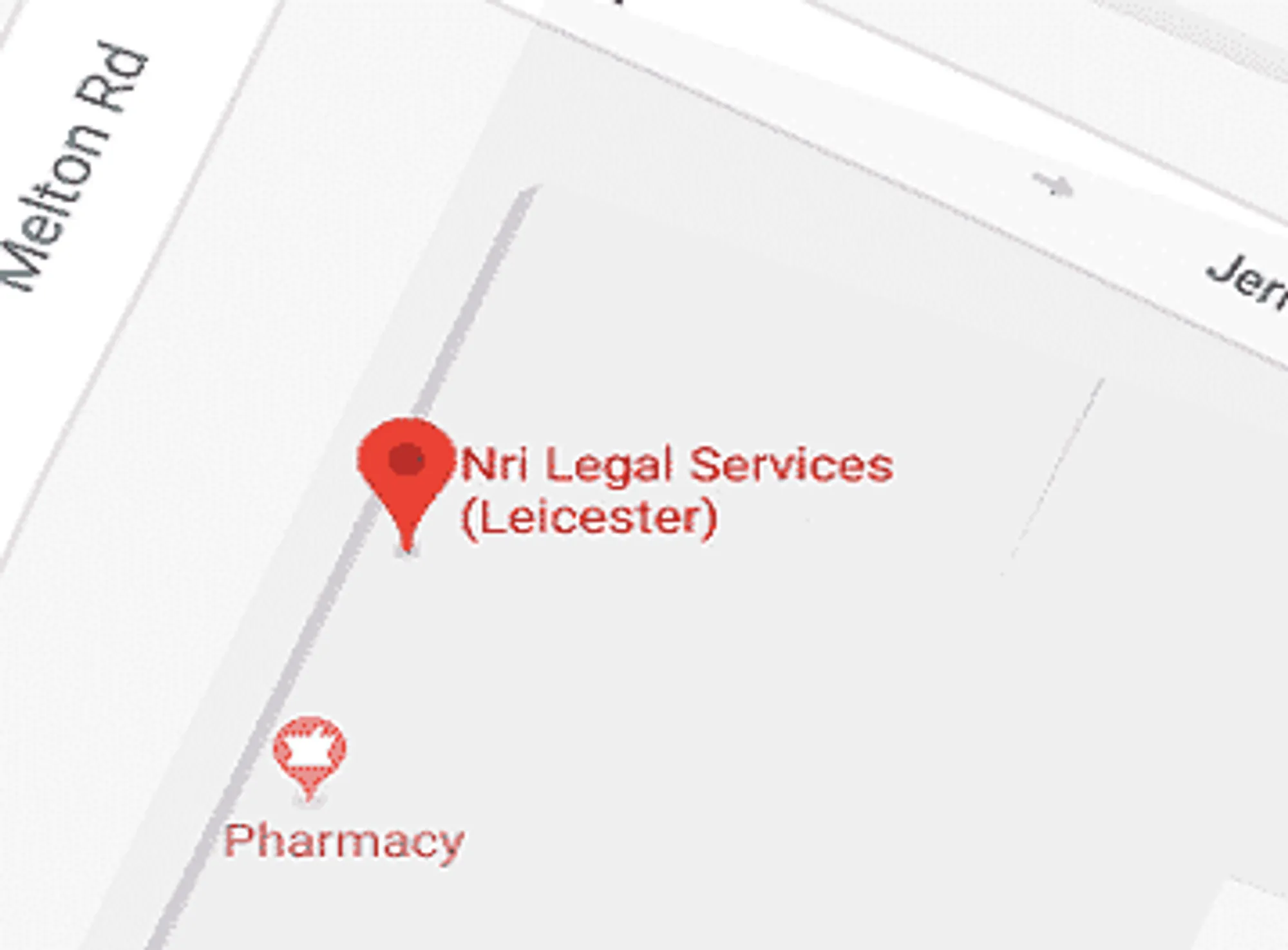
LEICESTER
1st Floor, Gateway House,
Grove Business Park, 4 Penman Way, Leicester, LE19 1SY.


KNOWLEDGE HUB
NRI Property in India: 11 Biggest Mistakes NRIs Must Avoid
Summary: NRIs often face property issues in India. Distance and incomplete documentation are major factors.Unclear title records and tax mistakes add to the trouble. Misuse of a Power of Attorney and poor monitoring complicate matters. This blog explains the major NRI property mistakes in India and the practical steps NRIs can take to protect their […]

Property Management in India for NRIs: Legal Rules, Documents and Tax Tips
Key takeaway: Owning a property in India is not as simple as it may seem. Many complications may arise later: an old mutation entry has not been updated, the tenant keeps delaying rent, municipal dues are pending, or a potential buyer asks for a document that nobody has updated or checked for years. The right […]
Land Encroachment – Legal Remedies, Documentation and Practical Solutions
Introduction:Land encroachment is a major problem that has become a complex governance problem arising from a mixture of procedural loopholes, inefficient administration and social elements. Although legal frameworks have evolved over the years, the increase in illegal encroachments on public, forest and urban areas does not seem to be stopping. This phenomenon is not the […]
Our Legacy

We are a premier global legal management firm set up 2 decades ago in the year 2000 exclusively for NRIs. Our purpose since our inception has been to offer a proactive, responsive and hassle-free legal services to overseas Indians. We are home to inspired leaders and professionals who excel at what they do. We are designed to cater to clients effectively from a long distance, recognizing their inability to travel frequently to India to pursue and supervise their legal matters. The company is vying to have a global presence served by our state-of-the-art communication system, methodical reviews and a structured approach designed and perfected over the years. Our thorough assessment and review is the hallmark of our 99% success rate in the resolution of matters.
We distinguish ourselves based on the quality of our services and legal advice. Our group of razor-sharp legal experts in law have, over the years been working dedicatedly for the NRI community. They have honed their skills to perfection by dealing with almost any and every situation that an NRI is likely to face in India. This network of some of the best legal minds spans the length and breadth of India. We are now 500 plus lawyers in our growing tribe, spread almost all over the country. Our pillars of strength are grounded in our legacy, goodwill and exceptional services.
FAQs
According to Hindu Law, after the death of a female, her property is devolved upon her children, children of predeceased children and husband. Therefore, in your case, children of predeceased children can claim their grandmother’s property.
Rights of grandson to inherit his grandfather’s property is from birth. A father can exclude his son from his self-acquired property, but a grandson cannot be excluded from his grandfather’s property, especially if the property is ancestral.
Yes, a suit for partition can be instituted by a person who is not residing in India, provided such person has a right in a joint property situated in India.
Yes, a partition can be done for all types of properties, i.e., agricultural, residential, or commercial.
The ownership rights of all the owners are equal in the case of joint property. The shares in the property are partitioned through a department or court of law, as the case may be.
In case there is an absence of family settlement at the time of partition, the land is partitioned by adopting the principle of good-to-good and bad-to-bad land. On the basis of this principle, the land is distributed amongst the co-owners, and they are granted a share of equal value.
If there is no division of assets yet, the right to ancestral property arises at birth, distinct from other forms of inheritance, where the right to inheritance arises at the owner’s death. Thus, the share of every individual generation is determined before birth.
The grandson cannot claim any right to the self-acquired property of the grandfather. It is all up to the grandfather what he wishes to do with his self-acquired property. No one can raise any objection.
After the amendment Act of 2005, according to Hindu Law by virtue of section 6, the property of Hindu male dying intestate devolves upon his heirs in Class-I category, which includes Sons, Daughters, Widows, Mother, Son’s Son etc. Hence, after the death of their grandfather, his class-1 legal heirs will be entitled to his estate through natural succession.
After the amendment Act of 2005, according to Hindu Law by virtue of section 6, the property of Hindu male dying intestate devolves upon his heirs in Class-I category, which includes Sons, Daughters, Widows, mother etc. Hence, the property will devolve upon son, daughter, wife and mother of the intestate being class-1 legal heirs. Further, the father falls in the category of class-2 heirs.